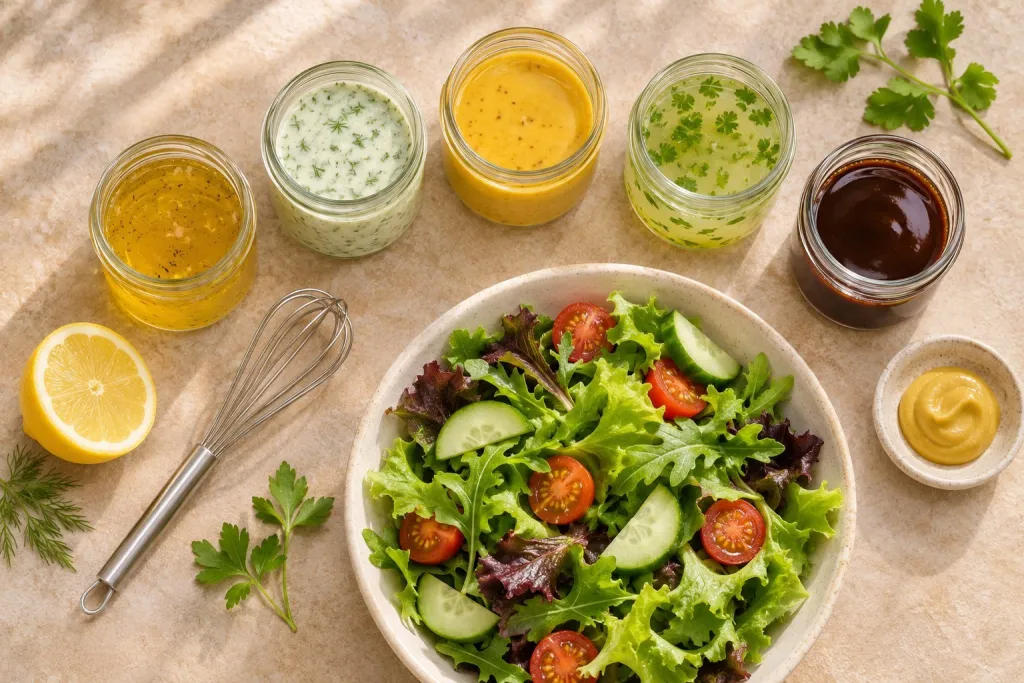
You can fill a bowl with crisp lettuce, cucumber, tomato and peppers for under 100 calories, then pour on dressing and triple it without noticing. If you’ve ever wondered why a “healthy salad” didn’t help your calorie budget, the dressing is usually why. This guide shows how to make a low calorie salad dressing that still tastes like something. You get the numbers per tablespoon, the ratios that work, a dozen easy swaps and six base recipes you can shake up in a jar in two minutes.
Nothing here asks you to give up oil completely or eat dry leaves. The goal is more flavor from every spoonful, so a smaller amount does the same job.
Why salad dressing is where the calories hide
Most classic dressings are built on oil, and oil is the most energy-dense food in your kitchen. One tablespoon of olive oil (about 13.5 g) has roughly 119 kcal, and every gram of fat carries about 9 kcal, more than double the 4 kcal in a gram of protein or carbohydrate. A restaurant-style vinaigrette is traditionally three parts oil to one part vinegar, so a 3-tablespoon pour can add 250–300 kcal before you count a single topping.
Creamy dressings are often worse. Ranch, blue cheese and Caesar made with mayonnaise run 70–80 kcal per tablespoon, and a typical restaurant side cup holds two to four tablespoons. That’s how a side salad ends up with more calories than the burger it came with.
The good news is that the flavor in a dressing doesn’t come from the oil. It comes from acid, salt, garlic, herbs, mustard and a touch of sweetness. Oil mostly carries those flavors and coats the leaves. Once you know that, cutting calories is a matter of changing the ratio, not losing the taste.
Salad dressing calories per tablespoon
These are approximate values per level tablespoon, based on USDA FoodData Central figures. Use them to see where a dressing’s calories come from:
- Olive oil, avocado oil, any vegetable oil: about 119–124 kcal
- Mayonnaise: about 94 kcal
- Peanut butter: about 94 kcal
- Tahini: about 89 kcal
- Honey: about 64 kcal
- Maple syrup: about 52 kcal
- Light sour cream: about 20 kcal
- Balsamic vinegar: about 14 kcal
- Plain nonfat Greek yogurt: about 9 kcal
- Dijon mustard: about 5 kcal
- Soy sauce: about 9 kcal
- Lemon or lime juice: about 3–4 kcal
- Apple cider or rice vinegar: about 0–3 kcal
The pattern is clear. Acids, mustard and yogurt are almost free; oils, nut butters and mayonnaise are expensive. Every low-calorie dressing in this guide simply moves the balance toward the cheap side of that list.
How much dressing does a salad actually need?
For a main-course salad of about 150–200 g of greens and vegetables, 1½ to 2 tablespoons of a well-emulsified dressing is enough to coat every leaf if you toss properly. For a side salad, 1 tablespoon does it. Most people use two or three times that because they drizzle it over the top, where it pools and runs to the bottom of the bowl.
A useful habit: build the salad in a large bowl with plenty of room, put the dressing in the bottom first, add the leaves and toss with your hands or two spoons for 20 seconds. You’ll be surprised how far a small amount goes. Every recipe in our recipe collection lists dressing by the gram for this reason. Our salad calorie calculator lets you test what changes when you halve it.
12 swaps for a low calorie salad dressing
- Flip the oil-to-acid ratio. Instead of 3:1, try 1:1 oil to vinegar or citrus. A teaspoon of Dijon mustard keeps it emulsified so it doesn’t taste sharp. This alone cuts a vinaigrette’s calories roughly in half.
- Use Greek yogurt as the creamy base. Plain nonfat Greek yogurt with lemon, garlic and herbs gives you a ranch- or Caesar-style dressing for about a tenth of the calories of a mayonnaise version, plus a few grams of protein. Our light Caesar uses exactly this.
- Add water. It sounds too simple, but a tablespoon of water or the brine from a jar of pickles stretches a dressing without changing the flavor much. It’s especially good with tahini and peanut dressings, which are thick enough to need it anyway.
- Measure with a spoon. Pouring from a bottle is the fastest way to double your dressing. A tablespoon measure takes two seconds and keeps you honest.
- Toss, don’t drizzle. As above: dressing in the bowl first, then the salad, then toss. You need about half as much for the same coating.
- Choose flavorful oils and use less. Toasted sesame oil, good extra-virgin olive oil and walnut oil taste stronger than neutral oils, so a teaspoon can do the work of a tablespoon.
- Bring in mustard. Dijon and whole-grain mustard add body, tang and emulsifying power for about 5 kcal a tablespoon.
- Use citrus zest as well as juice. The oils in lemon, lime and orange zest carry huge flavor. Zest a whole lemon into a dressing and you’ll want less oil.
- Grate in garlic, ginger or shallot. Aromatics add punch for almost no calories. A microplane turns them into a paste that blends straight in.
- Season properly. Under-salted dressing tastes flat, and flat dressing makes people add more. A good pinch of salt and pepper makes a smaller amount taste complete.
- Swap sugar for fruit. Mashed raspberries, a spoon of grated apple or a splash of orange juice adds sweetness and body with fiber instead of syrup.
- Let toppings do some of the work. Salty feta, briny olives, pickled onions and fresh herbs add flavor directly to the bowl, so the dressing doesn’t have to carry everything.
Six low-calorie dressing recipes
Each makes about 4 tablespoons, enough for two main-course salads. Shake everything in a small jar. Calories are approximate per tablespoon.
1. Lemon-Dijon vinaigrette (about 35 kcal per tbsp)
1 tbsp olive oil, 2 tbsp lemon juice, 1 tsp Dijon mustard, 1 tsp honey, ½ small garlic clove (grated), salt, pepper and 1 tbsp water. This is the everyday dressing for green salads, grain bowls and anything with chicken or salmon.
2. Creamy herb yogurt dressing (about 15 kcal per tbsp)
3 tbsp plain nonfat Greek yogurt, 1 tbsp lemon juice, 1 tsp olive oil, a small handful of chopped dill and chives, ½ garlic clove, salt and enough water to make it pourable. Think ranch, but lighter. Great with cucumber salads, potato salads and crunchy slaws.
3. Light Caesar (about 20 kcal per tbsp)
3 tbsp Greek yogurt, 1 tbsp finely grated parmesan, 1 tbsp lemon juice, 1 tsp Dijon, 1 small garlic clove and plenty of black pepper. Massage it into chopped kale and the leaves will soften beautifully.
4. Sesame-soy dressing (about 30 kcal per tbsp)
1 tbsp rice vinegar, 1 tbsp low-sodium soy sauce, 2 tsp toasted sesame oil, 1 tsp honey or maple syrup, 1 tsp grated ginger and 1 tbsp water. The sesame oil is strong, so you need very little. Perfect for cabbage slaws, rice bowls and edamame salads.
5. Thin tahini-lemon (about 30 kcal per tbsp)
1 tbsp tahini, 2 tbsp lemon juice, 2–3 tbsp water, ½ garlic clove and salt. Whisk until smooth; it will seize up, then loosen as you add water. Excellent with chickpeas, roasted sweet potato and kale.
6. Balsamic-berry dressing (about 20 kcal per tbsp)
6 raspberries mashed with a fork, 1½ tbsp balsamic vinegar, 2 tsp olive oil, ½ tsp Dijon, salt and pepper. Sweet, sharp and fruity; ideal on spinach, arugula and goat cheese salads.
What about store-bought “light” dressings?
Bottled light and fat-free dressings do cut calories, but read the label. Many replace oil with sugar, starch and gums to keep the texture, so a “fat-free” French or honey mustard can have 30–50 kcal per tablespoon, mostly from sugar. They also tend to be high in sodium. If you buy one, look for a short ingredient list, under 40 kcal per tablespoon and no more than about 2–3 g of sugar. Or use a bottled dressing as a flavor base and stretch it with lemon juice and yogurt.
How much can these swaps really save?
Here’s a realistic example for one big lunch salad. A classic 3:1 vinaigrette at 3 tablespoons is about 300 kcal. The same amount of the lemon-Dijon vinaigrette above is about 105 kcal. Use 2 tablespoons tossed properly instead of 3 drizzled, and you’re at 70 kcal. That’s a saving of roughly 230 kcal a day, or more than 1,600 kcal a week, without changing anything else in the bowl.
The same logic applies to creamy dressings. Swapping 3 tablespoons of a mayonnaise-based ranch (about 220 kcal) for the yogurt herb dressing (about 45 kcal) saves 175 kcal and adds around 4 g of protein.
Don’t cut fat to zero
A low-calorie salad dressing still benefits from a little fat. Vitamins A, D, E and K and plant compounds like carotenoids are fat-soluble, and research shows you absorb more of them from vegetables when the meal contains some fat. A teaspoon or two of olive oil, a few slices of avocado, a sprinkle of nuts or seeds, or some cheese is enough. Fat also slows digestion a little, which helps a salad keep you full for longer. Aim for some fat in the bowl, just not a flood of it in the dressing.
Matching dressings to salads
- Delicate greens (arugula, baby spinach, butter lettuce): light vinaigrettes. Heavy dressings crush them.
- Sturdy greens (kale, cabbage, romaine hearts): creamy dressings, tahini and Caesar; these leaves stand up to thick dressings and can even be dressed ahead.
- Grain and bean salads (quinoa, lentils, chickpeas, couscous): punchy lemon or vinegar dressings, since grains absorb acid and taste flat without it.
- Asian-style slaws and rice bowls: sesame-soy, peanut-lime made with water, or rice vinegar with ginger.
- Fruit salads with greens (strawberry, peach, apple): balsamic, honey-lime or maple-cider vinaigrettes.
Looking for recipes built around lighter dressings? Our low-calorie salads under 400 calories all use measured, lighter dressings, and you can see exactly how many calories the dressing adds in each recipe’s ingredient list.
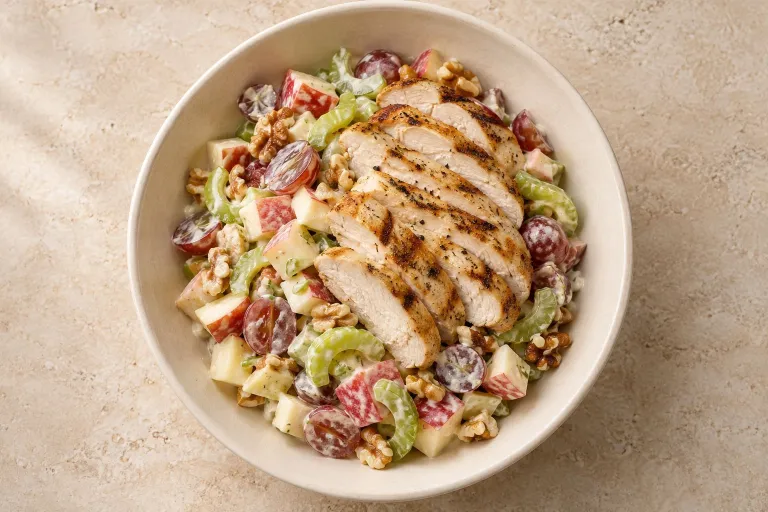
Light salads to try these dressings on


Storing homemade dressing
Oil-and-vinegar dressings keep in a sealed jar in the fridge for up to a week; olive oil may thicken or turn cloudy when cold, so let the jar sit out for 10 minutes and shake. Dressings with fresh garlic, herbs or yogurt are best within 3–4 days. Tahini and nut-butter dressings thicken in the fridge; loosen them with a splash of warm water before using. For meal prep, keep the dressing in a small separate container and add it just before eating so the leaves stay crisp.
Low calorie salad dressing: frequently asked questions
What is the lowest calorie salad dressing?
Plain lemon or lime juice, or a splash of vinegar with salt and pepper, is close to zero calories. Among dressings that feel like a real dressing, yogurt-based herb dressings (around 10–20 kcal per tablespoon) and mustard-heavy vinaigrettes (around 30–40 kcal) are the lowest.
Is olive oil dressing healthy if it’s high in calories?
Yes. Extra-virgin olive oil is rich in monounsaturated fat and is a staple of the Mediterranean diet. The issue is only the amount: use it as one part of a dressing rather than the main part, and measure it.
How many calories are in a typical salad dressing serving?
A standard serving on a label is 2 tablespoons. For classic vinaigrettes that’s often 120–160 kcal; for creamy dressings 130–180 kcal; for light versions 30–80 kcal. Restaurants usually serve 3–4 tablespoons.
Can I lose weight eating salads with dressing?
Absolutely, as long as the whole bowl fits your calorie target. A salad with plenty of vegetables, a good portion of protein and 1–2 tablespoons of a lighter dressing is filling and moderate in calories. Use our calorie calculator to check your favorite combination.
Is balsamic vinegar low in calories?
Fairly low, at about 14 kcal per tablespoon, mostly from natural sugars. Balsamic glaze is much more concentrated (often 30–40 kcal per tablespoon), so use it sparingly.
Small changes to the dressing are one of the easiest ways to make salads lighter without them feeling like diet food. Pick one of the six recipes above, make a jar on Sunday, and see how it changes your week of lunches.
