The short answer: the toppings that make a salad high in protein are lean meats and fish (grilled chicken, turkey, tuna, salmon, shrimp), eggs, legumes (chickpeas, lentils, beans, edamame), soy foods (tofu and tempeh) and protein-rich dairy such as parmesan, cottage cheese, feta or a Greek-yogurt dressing. Seeds, nuts and quinoa add a few extra grams on top. Combine one main protein with one or two smaller ones and a salad easily reaches 30 grams of protein or more.
That’s the answer in one paragraph. This guide shows how many grams each topping adds, which combinations work best, and how to build a salad that keeps you full until dinner instead of sending you to the snack drawer at 3 pm. If you want every topping ranked by protein per calorie, see our companion list, high protein salad toppings ranked.
Why protein makes a salad filling
Most of us have eaten the sad desk salad: a handful of leaves, a few tomatoes, a squeeze of dressing. It’s light and virtuous, and an hour later you’re hungry again.
The missing piece is almost always protein. Of the three macronutrients, protein is the most satisfying. It digests slowly, helps keep blood sugar steady and supports the muscles you build when you exercise. A good dose of protein turns a salad from a side dish into a proper meal.
Protein works best together with three other things:
- Fibre from vegetables, beans and whole grains adds bulk and slows digestion.
- Healthy fat from olive oil, avocado, nuts and seeds keeps you satisfied and helps your body absorb vitamins A, D, E and K from the vegetables.
- Volume from leafy greens and crunchy vegetables fills the plate, and your stomach, for very few calories.
Put all four together (protein, fibre, healthy fat and volume) and you have the formula for a salad you’ll actually look forward to.
How much protein should a salad have?
For a salad that’s a full meal, aim for 25 to 40 grams of protein. That range keeps most adults full for several hours and fits easily into a normal daily protein target.
- For weight loss: about 30 g of protein in a salad of 350–500 calories. More protein helps you feel full on fewer calories.
- After a workout: 30–40 g of protein plus some carbohydrates such as quinoa, potatoes or beans to help you recover.
- For a light lunch or side salad: 15–20 g is plenty.
Not sure where your own salad lands? Put it through our free salad calorie calculator. It adds up the calories, protein, carbs and fat of every ingredient, and you can enter grams for an exact count.
All protein figures below are approximate, based on USDA FoodData Central values for typical portions. Brands and cooking methods vary a little, but these numbers are close enough to plan a meal.
Animal proteins: the heavy hitters
If you eat meat and fish, these are the fastest way to a high-protein salad. One palm-sized portion covers most of what you need.
- Grilled chicken breast: about 31 g protein per 100 g cooked. Lean, affordable, takes on any flavour and slices beautifully over greens. Season it with lemon, garlic and oregano for Mediterranean salads, or cumin and chili for Mexican-style bowls. Our Cobb salad uses it to reach 43 g of protein for 449 kcal.
- Turkey breast: about 29 g per 100 g cooked. Almost the same as chicken, slightly milder. Leftover roast turkey makes a brilliant next-day salad.
- Canned tuna in water: about 26 g per 100 g drained. The pantry hero: a full meal’s worth of protein in 30 seconds. It’s the star of the Niçoise salad, which comes to 336 kcal and 30 g of protein per serving.
- Salmon: about 25 g per 100 g cooked. Rich, satisfying and full of omega-3 fats. Slightly higher in calories than chicken, but those calories come from healthy fats. Roast it, flake it and serve it warm over cold greens.
- Shrimp: about 24 g per 100 g cooked, for only around 100 kcal. One of the leanest proteins there is. Two minutes in a pan with garlic and you’re done. Shrimp loves citrus, mango, avocado and chili.
- Lean beef steak: about 26–29 g per 100 g cooked. Thinly sliced grilled sirloin or flank steak turns a salad into a hearty dinner, especially with arugula, cherry tomatoes and parmesan.
- Eggs: about 6 g per large egg. Two boiled eggs add 12 g of protein and a creamy richness. They’re a brilliant partner for tuna, chicken or beans.
Tips for animal proteins:
- Cook once, eat all week. Grill four chicken breasts or bake a tray of salmon on Sunday and you have protein ready for four salads. Keep cooked chicken, fish and shrimp in a sealed container in the fridge and eat them within three to four days.
- Slice against the grain so chicken and steak stay tender, not chewy.
- Season the protein, not just the salad. A plain chicken breast makes a bland bowl; a well-seasoned one makes it taste like a restaurant dish.
- Weigh it once. Most people underestimate a portion. Put your protein on a kitchen scale the first time so you know what 100 g looks like.
Plant proteins: more powerful than you think
You don’t need meat for a high-protein salad. Plant proteins bring something animal proteins don’t: fibre, and plenty of it. That makes them doubly filling.
- Tempeh: about 19–20 g protein per 100 g. Fermented soybeans pressed into a firm cake: nutty, hearty and one of the most protein-dense plant foods. Slice it thin and pan-fry until golden.
- Firm tofu: about 15–17 g per 100 g (extra-firm is higher). Press it, cube it, toss with a little cornstarch and soy sauce and roast until crispy. Crispy tofu is one of the best salad toppings, plant-based or not.
- Lentils: about 9 g per half cup cooked. Green and brown lentils hold their shape and soak up dressing beautifully. Perfect in warm salads with roasted vegetables.
- Edamame: about 9 g per half cup shelled. Bright green, sweet and fun to eat; made for Asian-style salads with sesame and ginger.
- Black beans: about 7–8 g per half cup cooked. The backbone of Mexican salads and burrito bowls, with corn, tomatoes and lime.
- Chickpeas: about 7 g per half cup cooked. Possibly the most versatile salad protein. Use them straight from the can, or roast them with olive oil and smoked paprika and use them instead of croutons, as in our kale Caesar salad.
The trick with plant proteins is to combine them. Half a cup of chickpeas gives you about 7 g, which isn’t a meal. But half a cup each of chickpeas, edamame and cooked quinoa plus two tablespoons of pumpkin seeds gets you to about 25 g, all from plants.
Tips for plant proteins:
- Rinse canned beans to remove extra salt and the starchy liquid.
- Roast chickpeas and tofu for crunch, so they replace croutons instead of adding to them.
- Pair legumes with grains or seeds: together they provide a full set of essential amino acids.
- Season boldly. Plant proteins are mild, so give them a marinade or a punchy dressing such as lemon-tahini or carrot-ginger.
Eating fully plant-based? Our vegan salads are built entirely on these ingredients, with protein and calories shown for each bowl.
Cheese and dairy: protein with flavour
Cheese has a bad reputation in healthy eating, but used well it adds protein and the salty, savoury punch that makes a salad taste finished.
- Parmesan: about 5–6 g protein per 15 g (2 tablespoons grated). Strong flavour, so a little goes a long way. Our arugula salad pairs it with pear and grilled chicken for 44 g of protein at 450 kcal.
- Cottage cheese: about 11 g per 100 g. Underrated as a topping. Spoon it onto tomato and cucumber salads, or blend it into a creamy dressing.
- Feta: about 4 g per 30 g. Salty and tangy, the soul of a Greek salad. Crumble it on top rather than mixing it in; you’ll taste more with less.
- Mozzarella: about 6–7 g per 30 g. Fresh and mild, the heart of a caprese.
- Greek yogurt: about 10 g per 100 g (0% fat). The best base for creamy dressings. Swap mayonnaise for Greek yogurt and you add protein while cutting calories sharply: a healthy tuna salad made this way has about 29 g of protein for around 150 kcal.
Seeds, nuts and grains: the finishing grams
These won’t carry a salad on their own, but they add 4–10 extra grams of protein plus crunch, healthy fats and minerals. Think of them as the top-up.
- Hemp seeds: about 9–10 g per 3 tablespoons. The most protein-dense seed. Soft and nutty; sprinkle generously.
- Pumpkin seeds: about 8–9 g per 28 g. Toast them in a dry pan until they pop; perfect on Mexican and autumn salads.
- Quinoa: about 8 g per cup cooked. A complete-protein grain that turns any salad into a grain bowl.
- Peanuts: about 7 g per 28 g. Essential in Thai-style salads with a peanut-lime dressing.
- Almonds: about 6 g per 28 g. Sliced almonds add crunch to spinach and fruit salads.
- Sunflower seeds: about 5–6 g per 28 g. Cheap, mild and kid-friendly.
- Wild rice and farro: about 6–7 g per cup cooked. Chewy, hearty grains for winter salads.
A word on portions: nuts and seeds have roughly 160–190 kcal per small handful. They’re worth it, but measure them. Two tablespoons is a sprinkle; half a cup is a second meal.
7 easy combinations that reach 30 g of protein
Pick one main protein, add one or two smaller ones, and you’re there. Each combination is approximate, for one meal-sized salad.
- The Classic: 100 g grilled chicken + 1 boiled egg + 2 tablespoons parmesan = about 42 g protein. Great over romaine with a light Caesar or lemon dressing.
- The Pantry Rescue: 1 can of tuna + 2 boiled eggs = about 38 g. Add potatoes and green beans and you’ve made a Niçoise.
- The Omega Bowl: 100 g roasted salmon + half a cup of edamame = about 34 g, with cucumber, avocado and sesame-ginger dressing.
- The Fiesta: 120 g garlic shrimp + half a cup of black beans = about 37 g, with corn, tomatoes, avocado and lime.
- The Crispy Plant Bowl: 150 g crispy tofu + half a cup of edamame + a tablespoon of chopped peanuts = about 35 g, fully plant-based.
- The Mediterranean Lentil: 1 cup cooked lentils + 30 g feta + a small handful of pumpkin seeds = about 30 g, vegetarian.
- The Power Grain Bowl: 1 cup chickpeas + 1 cup cooked quinoa + 3 tablespoons hemp seeds = about 31 g, vegan.
Want to test your own combination? Use the bowl builder on our home page: pick the High protein goal, tap ingredients into the bowl and watch the protein and calories update as you go.
Common mistakes that sink a high-protein salad
- Too small a portion. Three slices of chicken look generous on a mountain of lettuce but may be only 40–50 g, or about 15 g of protein.
- Relying on cheese alone. Cheese adds protein, but it adds fat and calories faster. Use it as a supporting player.
- Fried or breaded proteins. Crispy chicken strips can double the calories of grilled chicken for similar protein. Grill, bake, roast or air-fry instead.
- A heavy dressing that cancels it out. A high-protein salad drowned in creamy bottled dressing can top 900 kcal. Measure two tablespoons, or switch to a homemade vinaigrette or Greek-yogurt dressing.
- No carbohydrates after training. If you train hard, add quinoa, potatoes, beans or fruit so your body has fuel to recover. Our post-workout salads are built for this.
- Never changing it up. The same chicken salad every day gets boring fast. Rotate proteins and cuisines and you’ll stick with it.
High-protein salad recipes to try
Every main recipe on Salad Extravaganza has a “Choose your protein” switch, so you can make the same salad with chicken, fish, eggs, tofu or legumes and see the calories and protein for each version.
- Cobb salad: 43 g protein, 449 kcal, with grilled chicken, egg, avocado and blue cheese.
- Arugula salad: 44 g protein, 450 kcal, with pear, parmesan and grilled chicken.
- Niçoise salad: 30 g protein, 336 kcal, with tuna, potatoes, green beans and eggs.
- Kale Caesar salad: 23 g protein, 409 kcal, with crispy chickpeas instead of croutons.
- Greek salad: 434 kcal with chickpeas and feta, or switch to grilled chicken for more protein.
More high-protein salads


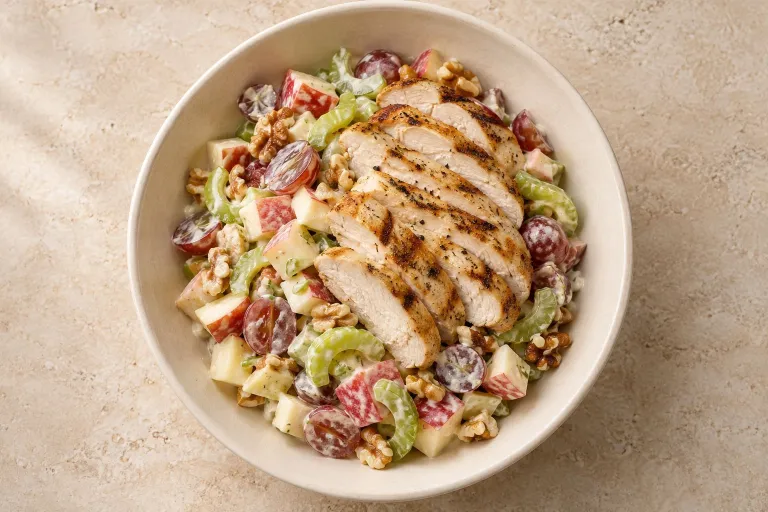
For the full collection, browse our high-protein salads, where every card shows protein and calories up front.
What toppings make a salad high in protein? Frequently asked questions
What toppings make a salad high in protein?
The best high-protein salad toppings are grilled chicken (about 31 g per 100 g), turkey, canned tuna (about 26 g per 100 g), salmon, shrimp, lean steak, eggs (about 6 g each), tempeh, tofu, lentils, edamame, chickpeas, black beans, cottage cheese, parmesan and Greek-yogurt dressings. Seeds, nuts and quinoa add a few extra grams.
How can I get 30 grams of protein in a salad?
Combine one main protein with one or two smaller ones. For example, 100 g of grilled chicken plus one boiled egg and two tablespoons of parmesan gives about 42 g, and one can of tuna plus two eggs gives about 38 g.
What is the highest-protein salad topping?
Per 100 grams, lean meats and fish lead: chicken breast has about 31 g, turkey about 29 g and tuna about 26 g. Among plant foods, tempeh is highest at about 19–20 g per 100 g, and hemp seeds are the most protein-dense seed.
What are the best vegan protein toppings for salad?
Tempeh, firm tofu, lentils, edamame, chickpeas, black beans, quinoa, hemp seeds and pumpkin seeds. Combine two or three, such as chickpeas with quinoa and hemp seeds, to reach about 30 g of protein.
Does cheese make a salad high in protein?
Cheese adds some protein (parmesan about 5–6 g per 2 tablespoons, feta about 4 g per 30 g), but it adds fat and calories quickly. Use it alongside a main protein rather than instead of one.
Are eggs a good salad protein?
Yes. A large egg has about 6 g of protein, so two eggs add 12 g. They pair especially well with tuna, chicken or beans.
How do I make a salad high in protein without meat?
Start with legumes (lentils, chickpeas or black beans), add a soy protein such as tofu, tempeh or edamame, and top with seeds or a little cheese. A Greek-yogurt dressing adds more protein if you eat dairy.
Will a high-protein salad help with weight loss?
A salad rich in protein and fibre keeps you full longer on fewer calories, which makes a calorie target easier to stick to. Keep dressings and rich toppings measured so the total stays around 350–500 kcal.
How can I check how much protein is in my salad?
Use our free salad calorie calculator. Tap in your toppings or enter their weight in grams, and it shows protein, calories, carbs and fat for the whole bowl.
Build your bowl
A high-protein salad comes down to one habit: every salad gets a main protein, and most get a second one. Here’s the whole guide in five steps:
- Start with a main protein worth 20–30 g: about 100 g of chicken, turkey, fish, shrimp or steak, a can of tuna, or 150 g of tofu or tempeh.
- Add a supporting protein worth 5–12 g: eggs, beans, lentils, edamame, chickpeas or a little cheese.
- Top with a crunchy finisher: pumpkin seeds, hemp seeds, almonds or roasted chickpeas.
- Pile on the vegetables for volume and fibre.
- Dress it lightly: a homemade vinaigrette or Greek-yogurt dressing, about two tablespoons.
Do that, and your salad stops being the meal you endure and becomes the one that powers your afternoon.
Protein figures are approximate, based on USDA FoodData Central values for typical portions, and vary by brand and cooking method. This article is general information, not medical advice; talk to a doctor or registered dietitian about your own needs.

