Protein is what turns a side salad into a meal that keeps you full until dinner. But salad toppings are not equal: some give you 20 g of protein for barely 100 calories, others give you 5 g for the same calories along with a lot of fat. This guide ranks the most popular high protein salad toppings by how much protein you get per 100 calories, shows how much to add to reach 30 g in one bowl, and covers plant-based options, budget picks and the toppings that look healthy but don’t pull their weight.
All numbers are approximate and based on USDA FoodData Central values for cooked or ready-to-eat foods.
Why protein matters in a salad
Vegetables are low in calories and high in fiber and water, which is great, but on their own they don’t keep most people satisfied for long. Protein is the most filling of the three macronutrients. It digests slowly, steadies blood sugar when eaten with carbohydrates and helps you keep muscle when you’re eating fewer calories. A salad with 25–40 g of protein feels like a proper meal; one with 8 g usually leaves you looking for a snack by mid-afternoon.
Most adults do well aiming for roughly 20–40 g of protein per meal. Active people and those trying to lose fat while keeping muscle often aim toward the top of that range. Our high-protein salads all contain at least 30 g per serving.
Best protein for salad: ranked by protein per 100 calories
This list tells you how “efficient” each topping is. The higher the number, the more protein you get for the calories it adds.
- Shrimp (cooked): about 24 g protein per 100 kcal
- Tuna, canned in water: about 22 g
- Turkey breast (roasted): about 21 g
- Chicken breast (grilled): about 19 g
- Nonfat Greek yogurt (as a creamy dressing): about 17 g
- Low-fat cottage cheese: about 17 g
- Lean beef sirloin (grilled): about 15 g
- Firm tofu: about 11–12 g
- Salmon (roasted): about 11 g
- Tempeh: about 10 g
- Edamame: about 10 g
- Parmesan: about 9 g
- Eggs (hard-boiled): about 8 g
- Lentils (cooked): about 8 g
- Black beans (cooked): about 7 g
- Hemp seeds: about 6 g
- Chickpeas (cooked): about 5–6 g
- Pumpkin seeds: about 5 g
- Feta: about 5 g
- Quinoa (cooked): about 4 g
- Almonds: about 4 g
Two things stand out. Lean seafood and poultry are in a league of their own for protein per calorie. And many “protein” toppings people rely on, like nuts, seeds, quinoa and cheese, are really sources of healthy fat or carbohydrate with some protein on the side. They’re great additions, but they’re not enough alone to make a salad high in protein.
How much of each topping gives you 30 g of protein?
Here’s what a 30 g protein salad looks like with each main topping (cooked weights):
- Chicken breast: about 100 g (3.5 oz), roughly 165 kcal
- Shrimp: about 125 g (4.4 oz), roughly 125 kcal
- Tuna in water: about 120 g, one standard can drained, roughly 140 kcal
- Turkey breast: about 100 g, roughly 145 kcal
- Salmon: about 135 g, roughly 280 kcal
- Firm tofu: about 175 g, roughly 250 kcal
- Tempeh: about 150 g, roughly 290 kcal
- Eggs: about 5 large eggs, roughly 390 kcal
- Edamame: about 250 g shelled, roughly 300 kcal
- Lentils: about 330 g cooked, roughly 380 kcal
- Chickpeas: about 340 g cooked, roughly 560 kcal
That last line explains why a chickpea salad rarely reaches 30 g of protein on chickpeas alone: you’d need more than two cans. The fix is to combine sources, which is how most of our recipes get there. Chickpeas plus feta plus a yogurt dressing, or lentils plus an egg plus pumpkin seeds, add up fast.
The top high protein salad toppings, one by one
Chicken breast
The classic for good reason: about 31 g of protein per 100 g cooked, mild enough to suit any dressing, and easy to cook in bulk. Grill, roast or pan-sear it, let it rest five minutes and slice across the grain. For variety, rub it with cumin and chili for a Southwest bowl, or lemon and oregano for a Greek salad.
Shrimp
The leanest option on the list and ready in three minutes. Buy frozen raw shrimp, thaw under cold water and sear with garlic. Shrimp works beautifully with citrus, avocado, mango and chili-lime dressings.
Canned tuna and salmon
The best no-cook, low-cost protein. Choose tuna in water if you’re counting calories, and drain it well. Canned salmon is higher in omega-3 fats and, with bones, a good calcium source. Both are perfect for Niçoise-style salads and quick office lunches.
Salmon fillet
Lower in protein per calorie than chicken, but those extra calories come mostly from omega-3 fats, which support heart health. A 120 g roasted fillet gives about 27 g protein. Pair it with bitter greens, citrus, cucumber and dill. Many of our heart-healthy salads are built around salmon.
Eggs
Cheap, portable and satisfying. Each large egg has about 6 g of protein and 78 kcal. Two eggs alone won’t make a high-protein salad, but they’re an excellent second protein: add them to tuna, chicken or bean salads.
Tofu and tempeh
The best plant proteins for salads. Firm tofu, pressed and pan-fried until golden, gives about 17 g per 100 g; tempeh about 20 g, with a nutty flavor and extra fiber. Both soak up marinades and dressings, so they shine with sesame-soy, peanut-lime and ginger flavors.
Edamame
Young soybeans: about 12 g protein per 100 g, plus fiber, and they come frozen and shelled. Boil for three minutes and add them to slaws and rice bowls for color and crunch.
Lentils, chickpeas and black beans
Not the most protein-dense, but they bring fiber, iron, folate and slow-release carbohydrates that make a salad deeply filling. Use them as one of two protein sources, or as the base of a grain-free bowl topped with feta, eggs or seeds.
Greek yogurt and cottage cheese
Often overlooked: a creamy dressing made with Greek yogurt can add 5–10 g of protein to a bowl without adding much fat. Cottage cheese works as a topping on tomato or cucumber salads.
Cheese, nuts and seeds
Feta, parmesan, goat cheese, almonds, walnuts and pumpkin seeds add flavor, texture and some protein, but they’re calorie-dense. Treat them as finishing touches: 20–30 g of cheese or a tablespoon or two of nuts per bowl.
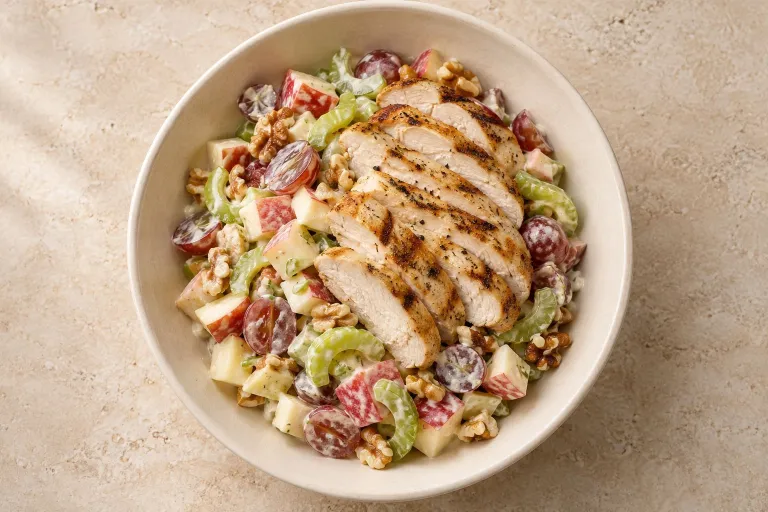
High-protein salads with 30 g+ protein


Quick ways to cook salad proteins
The easier your protein is to prepare, the more often you’ll make a proper salad. These methods take 15 minutes or less of hands-on time:
- Sheet-pan chicken: season breasts or thighs, roast at 220 °C (425 °F) for 18–22 minutes until they reach 74 °C (165 °F) inside, rest and slice. Make four portions at once.
- Three-minute shrimp: pat dry, sear in a hot pan with a teaspoon of oil and garlic for 1–2 minutes per side until pink and opaque.
- Oven salmon: 12–14 minutes at 200 °C (400 °F) on parchment; flake into large pieces once it rests.
- Crispy tofu: press for 10 minutes, cube, toss with a teaspoon of cornstarch and pan-fry or air-fry until golden all over.
- Jammy or hard eggs: lower into boiling water, 7 minutes for jammy, 9–10 for hard, then straight into iced water.
- Golden tempeh: slice thinly and pan-fry 3 minutes per side; a splash of soy sauce at the end adds flavor.
Season proteins well before they go on the salad. A well-seasoned topping means you need less dressing, which keeps calories down without making the bowl taste bland.
Plant-based high protein salad toppings
Vegan salads can reach 25–35 g of protein, but it takes some planning, because plant proteins are usually less concentrated. The most effective combinations are:
- Tofu + edamame: about 30 g from 150 g tofu and 100 g edamame.
- Tempeh + quinoa + pumpkin seeds: a hearty bowl with around 30 g.
- Lentils + chickpeas + hemp seeds: high in fiber and around 25 g.
- Black beans + quinoa + a peanut dressing: a Southwest-style bowl near 25 g.
Combining legumes with grains, nuts or seeds also gives you a complete spread of essential amino acids across the meal. Browse our vegan salads for recipes that already do the math.
Budget-friendly protein for salads
Protein can be the most expensive part of a salad. These give the most protein for the money in most supermarkets:
- Eggs
- Canned tuna, sardines and salmon
- Dried or canned lentils, chickpeas and black beans
- Frozen shrimp and frozen edamame, bought in large bags
- Whole chicken legs roasted and pulled, or chicken breasts bought in family packs
- Tofu, often cheaper per gram of protein than meat
Toppings that look healthy but don’t add much protein
Some popular salad toppings seem like protein but mainly add calories from fat or carbs:
- Avocado: wonderful for healthy fats and creaminess, but only about 2 g protein per 100 g.
- Quinoa: a complete protein, but only around 4 g per 100 g cooked.
- Nuts: about 4–6 g protein per 30 g handful, with 170–200 kcal.
- Croutons and tortilla strips: crunchy carbs with very little protein.
- Fried toppings: high in fat and salt; swap them for toasted chickpeas or seeds.
None of these are bad. Just don’t count on them for your protein.
How to build a high-protein salad in five steps
- Start with a big base of vegetables, 150–250 g of greens and crunchy vegetables.
- Add one lean main protein from the top of the list: chicken, shrimp, tuna, turkey, tofu or tempeh.
- Add a second, smaller protein: an egg, a few tablespoons of beans, edamame or a little cheese.
- Use a protein-boosting dressing, such as Greek yogurt with herbs or a thin tahini.
- Finish with a tablespoon of seeds or nuts for crunch.
Follow that template and you’ll land at roughly 35–45 g protein for 450–550 kcal. Want to check? Enter your ingredients in our salad calorie and protein calculator and it totals the protein for you.
Protein after a workout
If you eat your salad after training, pair the protein with some carbohydrate to refuel: quinoa, rice, sweet potato, fruit or beans. Our post-workout salads all have at least 25 g of protein and 30 g of carbs per serving for exactly this reason.
High protein salad toppings: frequently asked questions
What is the best protein to put on a salad?
For the most protein per calorie, shrimp, tuna, turkey and chicken breast are the best. For plant-based salads, tofu, tempeh and edamame lead. Salmon is the best choice if you also want omega-3 fats.
How can I get 30 g of protein in a salad?
Use about 100 g of cooked chicken breast or turkey, 125 g of shrimp or a can of tuna, then add an egg, beans or a yogurt dressing for a little extra. For vegan salads, combine tofu or tempeh with edamame, lentils or seeds.
Are chickpeas a good protein for salad?
They’re a good source of protein and an excellent source of fiber, but at about 9 g protein per 100 g cooked, they work best combined with another protein such as feta, eggs, yogurt or tofu.
Is a salad with protein good for weight loss?
Yes. Protein and fiber are the two most filling parts of a meal, and a salad gives you lots of both for relatively few calories. Keep the dressing measured and the high-fat toppings small.
Is it safe to keep cooked chicken or fish for salads?
Yes, for a few days. Cool cooked chicken, salmon and shrimp quickly, store them in a sealed container in the fridge at 4 °C (40 °F) or below, and eat them within three to four days. Keep them in a separate container from the leaves for meal prep.
How much protein should a salad have?
For a main meal, aim for 25–40 g. Around 30 g suits most people and is the minimum for every recipe in our high-protein collection.
Pick one main protein from the top of the list, add a second smaller source and a measured dressing, and your next salad will keep you going all afternoon.