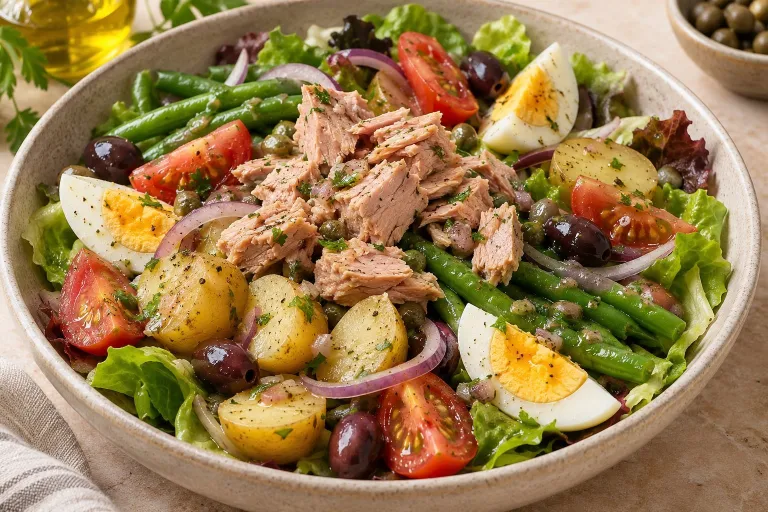
Meal prep salads sound perfect on Sunday and look sad by Wednesday. Wilted leaves, a puddle of tomato juice and soggy croutons are why many people give up on making lunches ahead. It doesn’t have to be that way. With the right ingredients, the right containers and a few simple habits, you can make salads on Sunday that are still crisp on Thursday or Friday. This guide covers how to keep salad fresh for up to five days: what to prep, what to leave until the last minute, how long each ingredient lasts and five meal prep salad ideas that hold up.
Why meal prep salads go soggy
Three things ruin a prepped salad: moisture, salt and acid, and time.
- Moisture. Water left on washed leaves, juice from cut tomatoes and cucumbers, and condensation inside the container all make greens limp and encourage spoilage.
- Salt and acid. Dressing, salt and citrus draw water out of vegetables and break down leaves. That’s great for a slaw you want to soften, but terrible for lettuce.
- Time and air. Cut vegetables keep breathing after harvest. Exposed to air and light, they lose crunch and color day by day.
Every tip below tackles one of those three problems. If you remember nothing else: dry everything, keep dressing separate, and choose ingredients that stay crunchy.
Choose sturdy ingredients
The single biggest factor in how long a prepped salad lasts is what you put in it. Some vegetables are built for the fridge; others should never be cut more than an hour before eating.
Greens that last (4–5 days)
- Kale: the champion. It actually improves after a day, especially if massaged with a little oil and salt.
- Red and green cabbage: stays crunchy for a week, even dressed.
- Romaine hearts: crisp and sturdy if kept dry.
- Iceberg: watery but very resilient when cut into wedges or thick shreds.
- Brussels sprouts, shaved: a great slaw base that lasts for days.
Greens to add on the day (1–2 days at most)
- Arugula, baby spinach, butter lettuce, mixed spring leaves and fresh soft herbs like basil. Keep these in their own container with a paper towel, or buy a small bag and add a handful when you eat.
Vegetables that stay crunchy
Carrots, bell peppers, radishes, celery, snap peas, broccoli, cauliflower, red onion, fennel and cabbage all hold well for 4–5 days once cut. Cucumber lasts 2–3 days, longer if you scoop out the watery seeds. Tomatoes are the troublemaker: whole cherry tomatoes keep well, but sliced tomatoes leak juice within a day.
Grains and beans: the meal prep backbone
Cooked quinoa, farro, brown rice, wild rice, bulgur, lentils and chickpeas are ideal because they don’t wilt. In fact, grain and bean salads often taste better on day two as the flavors mingle. Cool them completely before packing so they don’t steam the vegetables. Our high-protein salads include many grain and bean bowls that are perfect for this.
The step-by-step method for crisp meal prep salads
- Wash and dry the greens thoroughly. A salad spinner is worth it. Spin twice, then spread the leaves on a clean towel for 10 minutes. Wet greens are the number one cause of slime.
- Cut sturdy vegetables in advance; leave delicate ones whole. Slice peppers, carrots and cabbage on Sunday. Keep cherry tomatoes whole and avocado uncut.
- Cook and cool proteins and grains. Grill chicken, roast salmon, bake tofu, boil eggs and cook quinoa. Let everything cool to room temperature, then refrigerate.
- Make the dressing and store it separately. Small 60 ml (2 oz) containers or jars are perfect.
- Pack in the right order (see below), with the wettest items furthest from the leaves.
- Add a paper towel. A folded sheet on top of the greens absorbs condensation and can add a day or two of crispness.
- Refrigerate at 4 °C (40 °F) or below, ideally toward the back of the fridge, not the door.
How to pack a meal prep salad container
Whether you use a bowl-style container or a jar, the order matters. From bottom to top:
- Dressing (only if using a jar you’ll shake; otherwise keep it in a separate cup).
- Hard vegetables that won’t mind sitting in dressing: carrots, peppers, cucumber, red onion, cabbage.
- Grains and beans: quinoa, lentils, chickpeas, rice.
- Protein: chicken, salmon, tofu, eggs, tempeh.
- Cheese and softer items: feta, mozzarella, corn, roasted vegetables.
- Greens on top, as far as possible from the dressing.
- Crunchy toppings in a separate bag or cup: nuts, seeds, croutons, tortilla strips.
For a full guide to the jar method, read our article on mason jar salads. The short version: a wide-mouth 1-litre (32 oz) jar holds a full lunch, and the layers keep everything separate until you tip it into a bowl.
How long do meal prep salad ingredients last?
These are guidelines for ingredients stored in airtight containers in a fridge at 4 °C (40 °F) or colder. Always trust your senses: anything slimy, sour-smelling or off should go.
- Cooked chicken, turkey, salmon or shrimp: 3–4 days
- Hard-boiled eggs (in shell): up to 7 days; peeled, about 5 days
- Baked or pan-fried tofu, tempeh: 4–5 days
- Canned tuna once opened: 3–4 days
- Cooked quinoa, rice, farro, bulgur: 4–5 days (cool and refrigerate rice within an hour of cooking)
- Cooked lentils, chickpeas, black beans: 4–5 days
- Kale, cabbage, carrots, peppers, radishes: 5 days
- Romaine, cucumber: 3–4 days
- Soft greens, herbs: 1–2 days once washed
- Cut avocado: less than a day, even with lemon
- Feta, parmesan, hard cheeses: 5–7 days
- Oil-and-vinegar dressing: up to a week; yogurt or fresh-garlic dressing 3–4 days
Because cooked proteins top out at about four days, a sensible plan is to prep Sunday for Monday to Thursday, then make Friday’s salad fresh or prep a second, smaller batch on Wednesday evening.
Ingredients to add the day you eat
A few ingredients are always better added fresh. Keep them in your bag or at work, or take ten seconds in the morning:
- Avocado: cut it just before eating. Pack half an avocado with the pit in and a squeeze of lemon, then slice at lunch.
- Croutons, crackers, tortilla strips: they turn chewy within hours.
- Nuts and seeds: toast a batch on Sunday and keep them in a jar; add a spoonful at lunch.
- Soft herbs: basil and mint bruise and blacken; a little bag of leaves added fresh makes a salad taste like it was just made.
- Sliced apple or pear: they brown fast. Slice on the day or toss with lemon juice.
- The dressing: always last, unless the salad is a slaw or grain salad that likes to marinate.
Five meal prep salads that stay crisp all week
1. Kale and quinoa power bowl
Massaged kale, quinoa, roasted sweet potato, chickpeas and pumpkin seeds with a lemon-tahini dressing. Kale and quinoa both improve over a couple of days, so this is the most forgiving meal prep salad there is.
2. Asian sesame cabbage slaw with chicken or edamame
Shredded red and green cabbage, carrot, green onion and cashews with a sesame-soy dressing. You can even dress it ahead: cabbage softens slightly but stays crunchy for days.
3. Greek chickpea salad
Cucumber (seeds scooped out), peppers, red onion, olives, chickpeas and feta. Keep cherry tomatoes whole and add a handful of romaine on the day. Lemon and oregano dressing on the side.
4. Southwest black bean and corn salad
Black beans, corn, peppers, red onion and cilantro with a lime dressing, plus romaine added fresh. Top with grilled chicken or roasted salmon, and add avocado at lunch.
5. Lentil and roasted vegetable salad
Green or brown lentils with roasted zucchini, peppers and red onion, finished with arugula on the day. Dress the lentils while warm and they’ll absorb the flavor beautifully.
High-protein salads that are great for meal prep


A one-hour Sunday meal prep plan
Here is a simple order of work that gets four lunches ready in about an hour, with almost no waiting around:
- Minute 0: heat the oven to 200 °C (400 °F). Put a tray of cubed sweet potato and a second tray of chicken breasts or tofu in to roast.
- Minute 5: rinse quinoa and start it simmering; put eggs on to boil if you’re using them.
- Minute 10: wash and spin the greens, then lay them on a towel to dry.
- Minute 15: slice the sturdy vegetables: cabbage, peppers, carrots, red onion, radishes. Soak the onion in cold water for 5 minutes to soften its bite.
- Minute 25: shake two dressings in jars. One vinaigrette, one creamy, so the week doesn’t get boring.
- Minute 30: cool the eggs in iced water; fluff the quinoa and spread it on a plate to cool quickly.
- Minute 40: take the trays out of the oven and let everything cool. Toast a handful of seeds in the empty pan.
- Minute 55: pack the containers in the order above, add a paper towel, label them with the day and refrigerate.
Mix and match the components through the week so Monday’s bowl doesn’t taste like Thursday’s: the same chicken works with a sesame slaw one day and a Greek salad the next.
Common meal prep salad mistakes
- Packing warm food. Warm grains or chicken create steam, which condenses on the leaves. Always cool completely first.
- Cutting tomatoes on Sunday. Keep cherry tomatoes whole or add sliced tomato on the day.
- Salting vegetables in advance. Salt pulls water out. Season with the dressing at lunchtime instead.
- Using soft lettuce for Friday. Plan the soft greens for early in the week and the kale or cabbage salads for later.
- Forgetting texture. A prepped salad needs crunch to feel fresh; a spoonful of toasted seeds added at lunch fixes that.
Best containers for meal prep salads
- Glass containers with locking lids: airtight, don’t absorb smells, and you can see what’s inside. Choose ones big enough that greens aren’t crushed.
- Bento-style boxes with compartments: keep wet and dry ingredients apart without extra containers.
- Wide-mouth mason jars: great for layering, easy to carry, and naturally keep dressing at the bottom away from the leaves.
- Small dressing cups: leak-proof 60 ml (2 oz) pots are the most useful meal prep accessory you can buy.
Whatever you choose, make sure everything is completely dry before you pack it, and don’t overfill: leaves need a little room so they aren’t bruised.
Meal prep salads and calories
Making salads ahead is one of the easiest ways to stay on track with your calorie goals, because you decide portions once, calmly, instead of at lunchtime when you’re hungry. Weigh each ingredient as you pack the first container and you’ll know exactly what every lunch adds up to. Our salad calorie calculator makes it quick: enter the grams and it totals calories, protein, carbs and fat for the whole bowl.
A balanced meal prep salad usually lands between 400 and 550 kcal with 25–40 g of protein, enough to keep you full until dinner. If you’re aiming lower, try our salads under 400 calories.
Meal prep salads: frequently asked questions
How long do meal prep salads last in the fridge?
Most meal prep salads last 3–5 days if the dressing is kept separate, the greens are completely dry and the ingredients are sturdy. Cooked meat and fish set the limit at about four days.
How do you keep lettuce from getting soggy in meal prep?
Dry it thoroughly after washing, store it with a paper towel, keep it on top and away from wet ingredients, and add dressing only when you eat. Choosing romaine or kale over soft lettuces makes the biggest difference.
Can you freeze salad?
Not leafy salads; freezing destroys the texture of fresh vegetables. You can freeze cooked grains, beans and some proteins in portions, then thaw them overnight in the fridge and add fresh vegetables.
Should I put dressing on meal prep salads?
Only on cabbage slaws, kale salads and grain or bean salads, which hold up or even improve. For leafy salads, keep the dressing in a separate cup or at the very bottom of a jar.
What is the best salad for meal prep?
Kale, cabbage, grain and bean salads are the most reliable. They stay crisp, travel well and are filling. Add soft greens and avocado on the day for freshness.
Start small: prep three lunches this week using one of the five ideas above. Once you see they’re still crunchy on day three, you’ll never go back to the sad desk salad.