
“I had a salad for lunch and I was starving by three.” If that sounds familiar, the problem isn’t salad. It’s how the salad was built. A bowl of lettuce with a few cucumber slices and a drizzle of dressing is mostly water; it fills your stomach briefly and then disappears. A well-built salad, on the other hand, can keep you satisfied for four or five hours on 400–550 calories. This guide explains how to make filling salads for weight loss: the five building blocks, how much of each to use, the science of what makes food filling, and a simple formula you can use for any bowl.
What makes a meal filling?
Feeling full (satiety) depends on more than how much food is on your plate. Researchers who measure satiety consistently find a few factors that matter most:
- Protein: the most satiating macronutrient. It triggers fullness hormones, digests slowly and reduces hunger at the next meal.
- Fiber: adds bulk, slows digestion and feeds gut bacteria. Soluble fiber from beans, lentils, oats and some vegetables forms a gel that slows how fast your stomach empties.
- Volume and water content: foods with lots of water and air, like leafy greens and vegetables, stretch the stomach and signal fullness for very few calories.
- Some fat: fat slows digestion and makes food more satisfying, but it’s very calorie-dense, so a little goes a long way.
- Chewing and texture: crunchy, chewy foods take longer to eat, which gives fullness signals time to reach your brain.
A great salad is one of the few meals that can hit all five at once. The secret is not to rely on volume alone.
Why most salads leave you hungry
There are four common reasons a salad doesn’t hold you:
- Not enough protein. A few cubes of cheese or a sprinkle of nuts might add 5–8 g. You need closer to 25–40 g.
- No slow carbohydrates. Cutting all starch can leave you low on energy. A modest portion of beans, grains or starchy vegetables keeps blood sugar steady.
- Too small. A side salad portion isn’t a meal. Main-course salads should be big: 150–250 g of vegetables before toppings.
- Calories in the wrong place. When the dressing and fried toppings carry most of the calories, there’s little room left for protein and fiber.
The five building blocks of a filling salad
1. A big base of greens and crunchy vegetables
Start with volume: about 2–3 big handfuls of greens (roughly 80–120 g) plus 100–150 g of crunchy vegetables such as cucumber, peppers, carrots, cabbage, radishes, broccoli or snap peas. This whole layer usually adds only 50–100 kcal but gives the bowl its size and crunch.
Mix textures and colors. Romaine and cabbage for crunch, spinach and arugula for flavor, and two or three colorful vegetables. Variety makes the salad more satisfying to eat, and each color brings different nutrients.
2. A real portion of protein
This is the most important part. Aim for 25–40 g of protein, which looks like:
- 100–150 g cooked chicken, turkey, salmon or shrimp
- One can of tuna plus an egg
- 150–175 g firm tofu or tempeh
- A cup of lentils plus a little feta or a yogurt dressing
Read our guide to protein toppings ranked for a full comparison of protein per calorie. If you want recipes that guarantee it, our high-protein salads all have 30 g or more per serving.
3. A source of fiber-rich carbohydrate
A small amount of slow-digesting carbohydrate makes a salad feel like a complete meal and stops the mid-afternoon energy dip. Good choices, with typical portions:
- ½ cup (about 90 g) cooked quinoa, farro, wild rice or brown rice
- ½ cup (about 85 g) chickpeas, black beans or lentils
- 100 g roasted sweet potato, squash or potato
- A small piece of fruit: apple, pear, berries, orange or mango
- Corn or peas
Beans and lentils pull double duty: they add both protein and fiber. If you’re eating low-carb or keto, skip this block and lean harder on vegetables, protein and fat. Our keto salads under 12 g net carbs show how.
4. A measured amount of healthy fat
Fat makes a salad satisfying and helps you absorb fat-soluble vitamins from vegetables. But it adds up fast, so choose one or two of these per bowl:
- ¼–½ avocado (60–120 kcal)
- 1 tablespoon of nuts or seeds (about 50–90 kcal)
- 20–30 g feta, goat cheese or parmesan (50–110 kcal)
- A handful of olives (about 40–60 kcal)
- The oil in your dressing
5. A flavorful dressing, measured
About 1½–2 tablespoons tossed through the salad is enough. Dressing is the most common place calories hide, so measure it. Our guide to low calorie salad dressings has six recipes that come in at 15–35 kcal per tablespoon.
The filling salad formula
Put the blocks together and you get a template that works for almost any flavor combination:
- Vegetables: 150–250 g (about 50–100 kcal)
- Protein: 25–40 g protein (about 150–250 kcal)
- Fiber-rich carb: one portion (about 80–130 kcal)
- Healthy fat: one or two small portions (about 60–120 kcal)
- Dressing: 1½–2 tablespoons (about 40–100 kcal)
Total: roughly 400–550 kcal, 30–40 g protein and 8–15 g fiber. That’s a lunch that keeps most people full for four to five hours. If you need a lighter version, reduce the fat and carb portions and keep the protein and vegetables generous; our salads under 400 calories follow this approach.
Three filling salads built with the formula
Mediterranean chickpea and chicken bowl (about 520 kcal)
Romaine, cucumber, tomato and red onion; 100 g grilled chicken; ½ cup chickpeas; 25 g feta and a few olives; lemon-oregano dressing. About 42 g protein and 10 g fiber.
Salmon, quinoa and avocado salad (about 540 kcal)
Spinach and arugula, cucumber and radish; 110 g roasted salmon; ½ cup quinoa; ¼ avocado; lemon-Dijon vinaigrette. About 33 g protein, rich in omega-3 fats.
Crispy tofu and edamame slaw (about 480 kcal)
Red and green cabbage, carrot, pepper and green onion; 150 g crispy tofu; 75 g edamame; a tablespoon of peanuts; peanut-lime dressing thinned with water. About 32 g protein and 9 g fiber, and fully vegan.
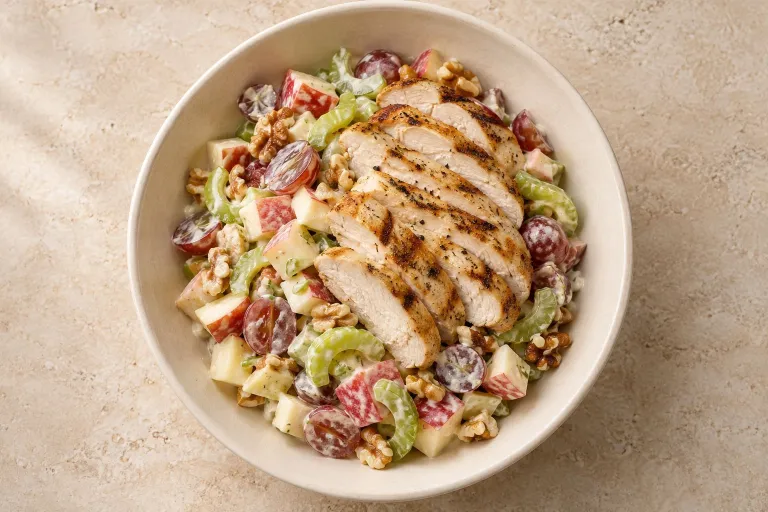
Filling salads with 30 g+ protein


Tricks that make a salad more satisfying
- Add something warm. Warm roasted vegetables, freshly cooked grains or a hot piece of chicken make a salad feel like a proper meal, especially in winter.
- Chop it. Chopped salads get a bit of every ingredient in each bite, so every forkful tastes complete and satisfying.
- Include crunch. Toasted seeds, raw cabbage, radish and snap peas take longer to chew, which slows you down.
- Season boldly. Salt, acid, herbs and spice make food more satisfying, and you’ll want less dressing.
- Eat slowly. Fullness signals take about 15–20 minutes to register. Put your fork down between bites.
- Drink water with it. A glass of water adds volume and helps the fiber do its job.
- Add a pickled element. Pickled onions, cucumbers or peppers add sharp flavor for almost no calories.
How many calories should a filling salad have?
It depends on your needs and goals, but here’s a rough guide for a main-meal salad:
- Weight loss for smaller or less active people: 350–450 kcal with at least 25 g protein
- General healthy eating: 450–600 kcal with 30–40 g protein
- Active people and after workouts: 550–750 kcal with 35–45 g protein and more carbohydrate
The best way to know what’s in your bowl is to measure it once. Our salad calorie calculator adds up calories, protein, carbs, fat and fiber as you add each ingredient, and the bowl builder on our homepage gives you a quick visual estimate.
Filling salads and weight loss
Salads can be an excellent tool for losing weight, not because they’re magic, but because a well-built salad delivers a lot of food volume, protein and fiber for relatively few calories. That combination makes it easier to eat a little less without feeling deprived. Studies on “volumetrics”, eating more low-energy-density foods like vegetables, have found that starting a meal with a large salad can reduce the total calories people eat at that meal.
The flip side is that salads can quietly become high-calorie meals. A restaurant chicken Caesar or cobb salad can easily pass 900 kcal thanks to creamy dressing, croutons, fried toppings and cheese. The formula above keeps the satisfying parts and trims the extras.
And remember, no single meal decides your progress. Consistency does. A filling salad you enjoy and can repeat several times a week will do more for you than a strict one you abandon after three days.
A week of filling salad lunches
Here’s how the formula plays out across five working days, using ingredients that overlap so you don’t need a huge shopping list:
- Monday – Greek chicken bowl: romaine, cucumber, tomato, red onion, grilled chicken, chickpeas, a little feta and olives with a lemon-oregano dressing. Cook extra chicken for Wednesday.
- Tuesday – Tuna Niçoise-style plate: butter lettuce, green beans, a few small boiled potatoes, cherry tomatoes, a can of tuna and one egg with a Dijon vinaigrette. Satisfying, cheap and no cooking beyond boiling.
- Wednesday – Southwest chicken chop: romaine, corn, black beans, peppers and red onion, the leftover chicken and a quarter avocado with a lime-cilantro dressing.
- Thursday – Kale and quinoa power bowl: massaged kale, quinoa, roasted sweet potato, chickpeas and pumpkin seeds with lemon-tahini. Make it on Sunday; it gets better as it sits.
- Friday – Salmon and citrus salad: arugula and spinach, orange segments, cucumber, roasted salmon and a few almonds with a honey-lime dressing. A lighter, brighter end to the week.
Each of these lands between about 420 and 560 kcal with 30–45 g of protein. You’ll find versions of all of them in our recipe collection, each with the exact calories, protein, carbs, fat and fiber per serving, so you don’t have to calculate anything yourself.
Filling salads for different diets
- Vegetarian: eggs, halloumi-style grilling cheese, Greek yogurt dressings and beans make protein easy. Two eggs plus half a cup of lentils plus feta gives about 30 g.
- Vegan: combine tofu or tempeh with edamame, lentils or seeds, and use tahini or peanut dressings for richness.
- Low-carb: skip grains and starchy vegetables, double the non-starchy vegetables and use avocado, olives, cheese and nuts for satisfying fat.
- Gluten-free: choose quinoa, rice, potatoes or beans for your carb block, and toasted seeds instead of croutons.
Common mistakes to avoid
- Skipping protein to save calories. You’ll save 150 kcal at lunch and probably eat 300 in snacks later.
- Fearing all carbs. A half-cup of beans or grains often makes the difference between “nice” and “satisfying”.
- Piling on “healthy” fats. A whole avocado, a handful of nuts and olive oil dressing in one bowl can add 600 kcal of fat.
- Eating it too fast. A salad eaten in five minutes at your desk is less satisfying than the same salad eaten in fifteen.
- Making it too small. If you’re hungry an hour later, add vegetables and protein, not more dressing.
Filling salads for weight loss: frequently asked questions
How do I make a salad more filling without adding many calories?
Increase lean protein (chicken, shrimp, tuna, tofu), add beans or lentils for fiber, bulk up the vegetables and keep the dressing to 1½–2 tablespoons. Crunchy and warm ingredients also help.
Why am I still hungry after eating a salad?
Usually because the salad had little protein and fiber and was mostly leafy greens. Add 25–40 g of protein and a portion of beans, grains or starchy vegetables.
Is a salad a good lunch for weight loss?
Yes, if it’s built with enough protein and fiber and a measured dressing. A 400–550 kcal salad with 30 g of protein keeps most people full until dinner.
What should I add to a salad to keep me full?
Chicken, fish, eggs, tofu, tempeh, beans, lentils, quinoa, sweet potato, avocado, nuts or seeds. Combine one lean protein, one fiber-rich carbohydrate and one small portion of fat.
How big should a meal salad be?
About 150–250 g of vegetables plus toppings, which looks like a large mixing bowl, not a side plate. Volume is the cheapest part of a salad in calorie terms.
Try the formula on your next lunch: big vegetables, real protein, one smart carb, a little fat and a measured dressing. You’ll notice the difference by mid-afternoon.

